NOTE
( No Offense To Earth )
RE- DESIGN AND EXPAND THE PRODUCT LINE TO MAKE IT MORE ERGONOMICAL AND AESTHETICALLY PLEASING.
It all began with a close examination of the pens already available in the market—studying their refills, number of components, repairability, material mix, ergonomics, aesthetics, sustainability, comfort, and overall form.

PROBLEM WITH EXSISTING PENS?

Most pens today — even the “eco-friendly” ones — are compromises. Made from mixed plastics, they’re cheap, disposable, and rarely recyclable, adding to growing waste. Many sustainable versions only swap materials without addressing the full lifecycle — no refills, no repair, no afterthought. Ergonomically, pens remain one-size-fits-all, ignoring the diversity of hands, grips, and writing habits, often leading to discomfort over time. Aesthetically too, they’ve become predictable tools, stripped of emotion or meaning. In an age where writing is slower and more intentional, pens no longer reflect that intimacy — they’ve lost the connection between the hand, the mind, and the page.


PROBLEM ANAYLSIS
Consumers often see “sustainable” pens as novel ideas rather than everyday essentials — admired for their concept but rarely chosen for daily use. This happens because many of these products focus on message over experience; they look ethical but don’t feel effortless in the hand. The challenge, then, is to create a pen that bridges that gap — one that feels natural, comfortable, and desirable, not just responsible. Our aim was to design a pen that combines aesthetic appeal with true ergonomic comfort, crafted for long writing sessions yet refined in form. And above all, to make this quality accessible and affordable for users everywhere, proving that sustainability doesn’t have to be a luxury.
RESEARCH AND DEVELOPMENT
Our process began with a close study of existing pens in the market — analyzing them through parameters such as cost, shape, material composition, plastic percentage, and overall build quality. This helped identify gaps between affordability, sustainability, and comfort.
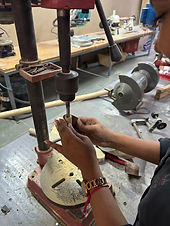
We initially experimented with wood, exploring its tactile warmth and craft potential, before transitioning to bamboo for its lighter weight and renewability. The focus was not only on materials but also on how a pen is made — understanding joinery, assembly, and manufacturing constraints.
Through iterative prototyping, we tested different grips, diameters, and forms. User trials across various age groups revealed that the tripod grip offered the best balance of control and comfort during extended writing sessions.


CONCEPTS

We propose a three-part pen consisting of a body, cap, and refill. This innovative design focuses on enhancing the writing experience through optimal weight distribution and a secure grip. This design not only prioritizes functionality but also enhances the overall user experience with its thoughtful construction and ergonomic features.

To improve the design of this refill- we incorporated tripod grip that enhances user comfort, allowing for extended writing sessions. It also provides ample space for the fingers and thumb, ensuring a proper and secure hold. The curved edges help to minimize pain and irritation often experienced with writing instruments.

To improve user experience while prioritizing sustainability, we propose a redesign of both the small refill and the body of our writing instrument. Our goal is to create a functional and modular design that not only enhances comfort during use but also promotes ease of handling. By focusing on user-friendly features, we aim to ensure that every writing session is enjoyable and efficient.
BEHIND THE SCENES